


For younger readers who missed out on the heyday of SpecGammon
The playing pieces are known by many names in different regions, including drawls, tones, puns, discourses, or lips. The goal of the game is to remove (off-
Moves are made by rolling the vowel dice and creating phonotactically acceptable syllable structures from the available consonantal pieces. Opponents’ pieces move in opposite directions (cross phonation), giving many opportunities for interaction (conversation). In addition to moving your own pieces around the board, if you land on an opponent’s singleton piece (phonating a glot) you can send it back to the beginning of the board.
There is also a reduplicating die, a mysterious die with 1, 2, 4, 8, 16, 32, and 64 σ’s on its sides. Only the oldest of old timers know what it is for.
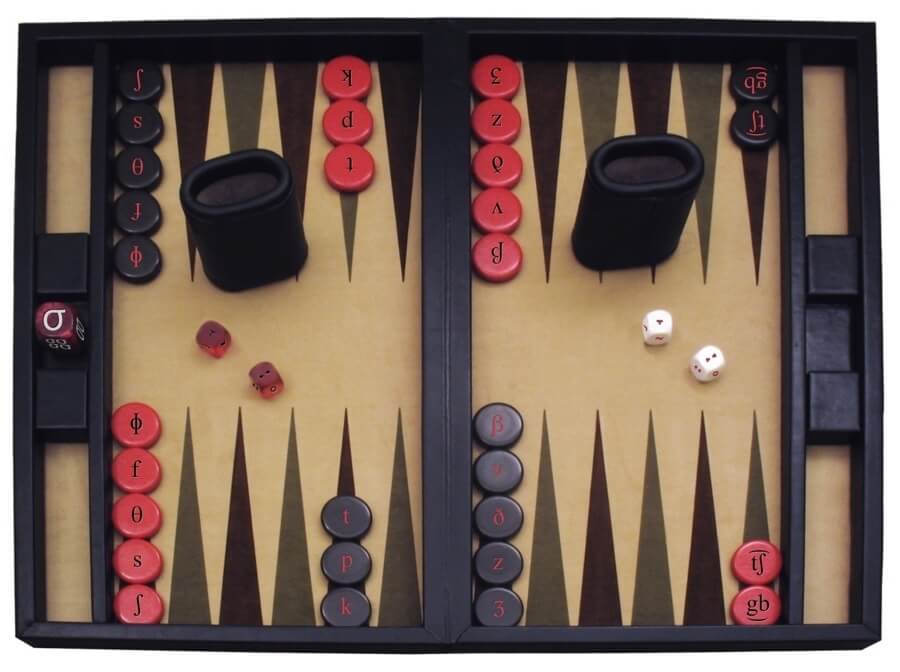
A modern
SpecGammon board
The history of SpecGammon is murky at best. Some like to claim
We do know that very similar boards have been found dating back to at least the early 17th century, such as that found on the wreck of the Esperanto Warship Ĉu-Ne, which sank in 1628.
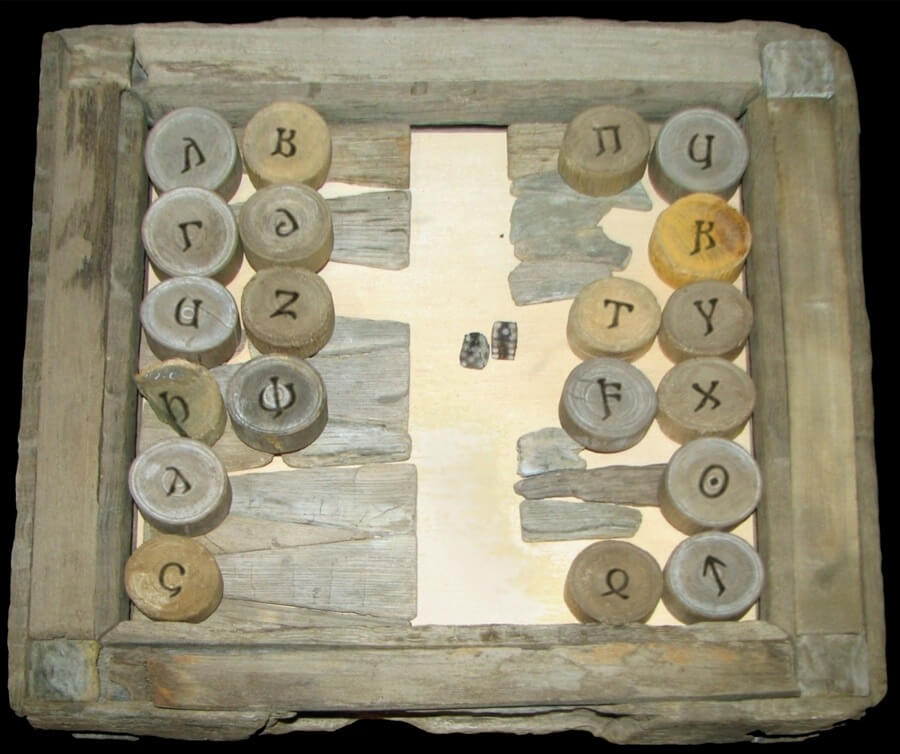
SpecGammon board recovered from the wreck of the Esperanto Warship Ĉu-Ne,
sunk in 1628
There is even speculation that the game may have evolved from a Roman game known as ludus linguum duodecim scriptorum (“language game of twelve lines”), which seems plausible, but too many details have been lost to history.
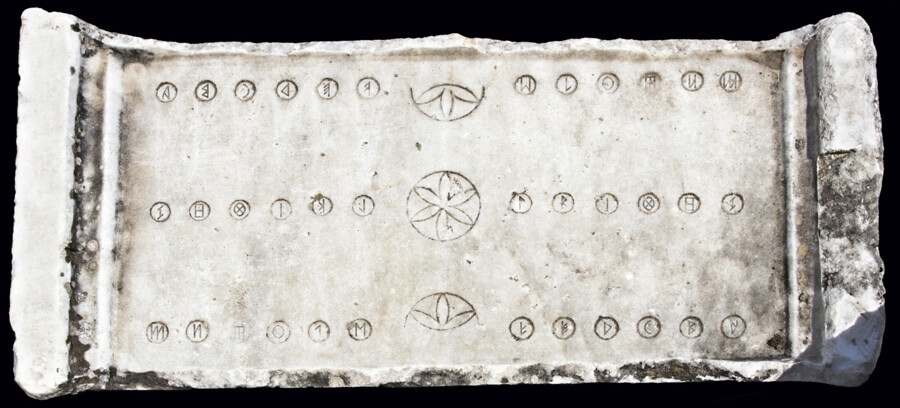
A Roman ludus linguum duodecim scriptorum board from the 2nd century, featuring the
Old Italic Alphabet
Modern critics argue that the game is “unnecessarily complex” and “linguistically exhausting”, but these are usually people
Despite the game’s decline, a small but vocal group of SpecGammon purists still gather in dimly lit faculty lounges to argue over whether a voiced post-
Image credits: “SpecGammon board recovered from the wreck of the Esperanto Warship Ĉu-Ne, sunk in 1628” adapted from “Old Backgammon Vasa Edit”, Wikimedia Commons, CC BY-SA 3.0. “A Roman ludus linguum duodecim scriptorum board” adapted from “Backgammon board